

Concerns in the municipality of Tías regarding the potential establishment of a photovoltaic plant on rustic land in Mácher have received an institutional response from the Cabildo of Lanzarote this Friday. The island corporation announced it will issue an unfavourable report on the project currently under consideration by the Government of the Canary Islands, as it does not fit the territorial and energy model it advocates for the island.
This statement comes just a day after the Town Council of Tías formally communicated its rejection of the so-called Tías I Solar Photovoltaic Installation, promoted by RS Iberia 23. The council conveyed its opposition to the Ministry of Ecological Transition and Energy of the Government of the Canary Islands, citing urban incompatibilities, the impact on protected agricultural land, and potential landscape effects.
In this context, the Cabildo, led by Oswaldo Betancort, clarified that the file is currently in the administrative consultation phase and that the report request submitted by the regional government is part of the standard processing procedure. The island institution emphasised that, thus far, no declaration of public interest has been applied under Article 6 bis and there is no authorisation for the installation to proceed.
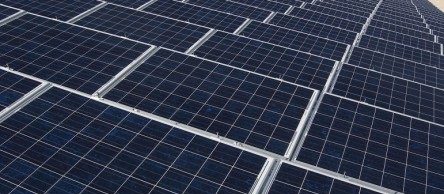
The project involves the construction of a solar plant with a capacity of 1.176 megawatts peak (MWp) over an area of 28,721 square metres in Mácher, including the installation of 1,680 photovoltaic panels, as well as the necessary infrastructure to connect to the electrical grid.
Debate on the Energy Model of Lanzarote and La Graciosa
The position expressed by the Territorial Policy Department, led by Councillor Jesús Machín in the Cabildo, is part of the ongoing debate over the implementation of renewable energy sources in Lanzarote. The island corporation announced this Friday that the Government of the Canary Islands has withdrawn the maps related to the so-called Renewable Acceleration Zones (ZAR), a measure that will allow for a review of the planned legislation and the creation of new proposals tailored to the territorial and landscape characteristics of Lanzarote and La Graciosa.
According to the Cabildo, the proposal it will defend before the regional government advocates for concentrating energy installations in degraded or previously transformed areas, thereby avoiding implementation on protected agricultural land and regions of special landscape value.
Concerning the planned facility in Mácher, the institution believes the proposed location does not meet these criteria. Consequently, it will provide a negative assessment during the ongoing administrative process.
On Thursday, the Mayor of Tías, José Juan Cruz, called for respect for the protections established for agricultural land and warned of the consequences that granting permission for such projects in particularly sensitive areas could have from both a landscape and territorial perspective.