
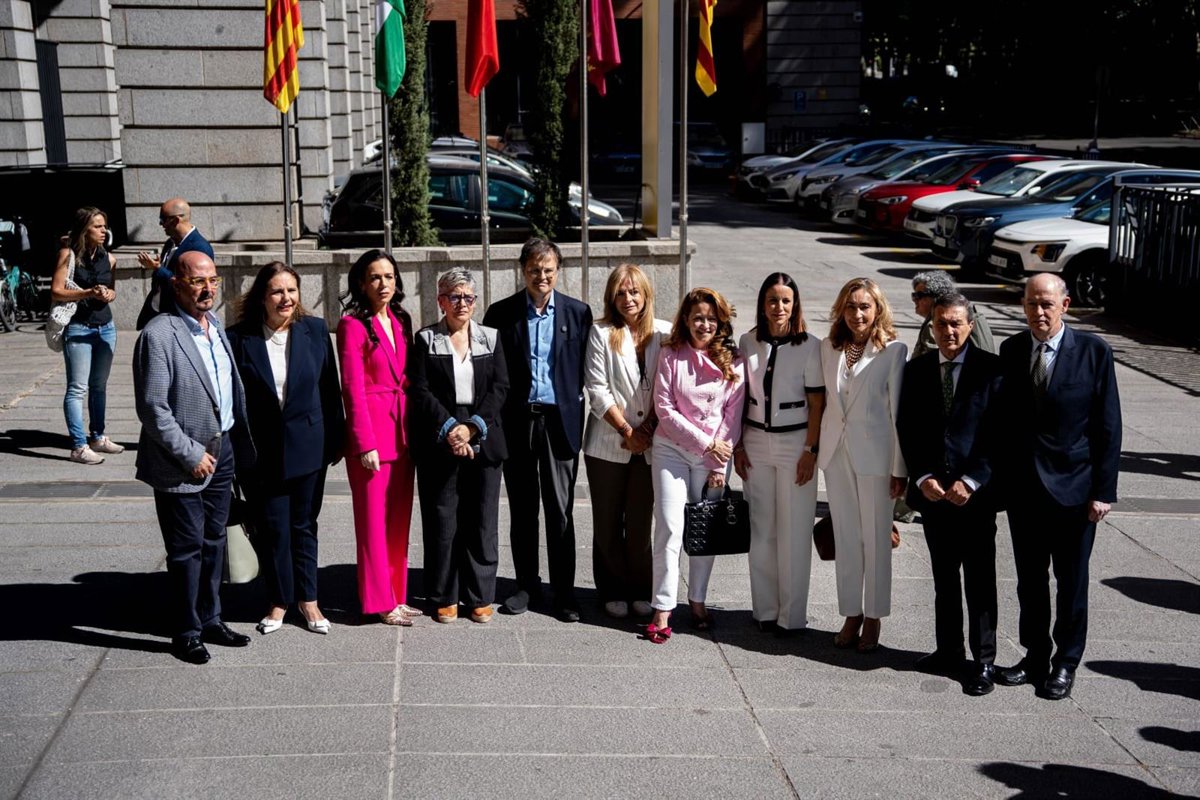

– HEALTH COUNCIL
SANTA CRUZ DE TENERIFE, 10 Jun. (EUROPA PRESS) –
The Health Council of the Government of the Canary Islands has joined a request from fifteen other autonomous communities, urging the Ministry of Health to resolve the conflict regarding the Framework Statute with doctors. As the bodies responsible for delivering healthcare in their regions, they lament the organisational and assistance consequences stemming from a conflict whose resolution rests with the State.
This was emphasised on Wednesday by the area’s head, Esther Monzón, following a meeting of the Interterritorial Council of the National Health System (SNS) held at the Ministry of Health in Madrid. The meeting addressed the national conflict involving medical unions in Spain and the Ministry over disagreements surrounding the recently approved Framework Statute.
The Health Councillors of the autonomous communities conveyed a “common position” regarding the situation created by the doctors’ strike, reaffirming their commitment to professionals and patients, as stated in a note from the Council.
In this context, Monzón, alongside the Councillors from fifteen other autonomous communities, signed a joint document urging the Ministry of Health to immediately implement structural and sustainable measures that will allow for the improvements required by the National Health System, specifically those that address the conflict with doctors regarding the Framework Statute.
A “BASIC” STATUTE
The autonomous communities reiterate that the Framework Statute is a “basic” state provision whose approval, modification, and development fall exclusively under the Ministry of Health, in accordance with the competencies granted by the legal framework.
They highlight that it is precisely the content and processing of this statute that has triggered the current nationwide strike, as evidenced by the origin of the demands and the very framework through which the organising bodies have called for action.
The autonomous communities indicate that, as the authorities responsible for healthcare delivery, they bear the organisational and assistance repercussions of a conflict that is outside their competency scope. They affirm that they are “acting responsibly,” adopting measures to ensure continuity of healthcare and minimise the impact on citizens.
However, they warn that resolving this conflict requires an agreement at the state level from the Ministry of Health, which holds the normative capacity to amend the Framework Statute and respond to the raised demands.
REOPENING DIALOGUE
Furthermore, they believe that the approval of the text by the Council of Ministers has not closed the conflict, as the ongoing strike demonstrates that the underlying issue remains unresolved. They state that it is “essential” to urgently reopen a real, effective, and constructive dialogue process with the medical community.
The Health Councillor, along with her counterparts from the autonomous communities, has highlighted that this conflict occurs in a context that is “particularly demanding” for the healthcare system, marked by a structural deficit of professionals, increasing retirements, the chronic nature of diseases, and an ageing population.
Consequently, the Health Council of the Government of the Canary Islands supports the joint position and urges the Ministry of Health to promote immediate structural measures that will address this challenge, responding to proposals that have been put forward for years to enhance the availability of professionals and ensure the sustainability of the system.
INDEPENDENT MEDIATION
On 20 March, Canarias, together with Euskadi and Castilla-La Mancha, sent a letter to the Minister of Health outlining the need for an independent mediation figure to facilitate dialogue between the Ministry of Health and the medical community with the aim of helping to resolve the conflict arising from the disagreements concerning the Framework Statute.
In that letter, the three Health Councillors suggested considering the inclusion of an independent entity, such as the Patient Organisations Platform, as a potential mediation figure. They emphasised that activating such a mechanism falls within the state’s domain and that its purpose should be to create a negotiation space to prevent prolonging the conflict and its impact on services.