

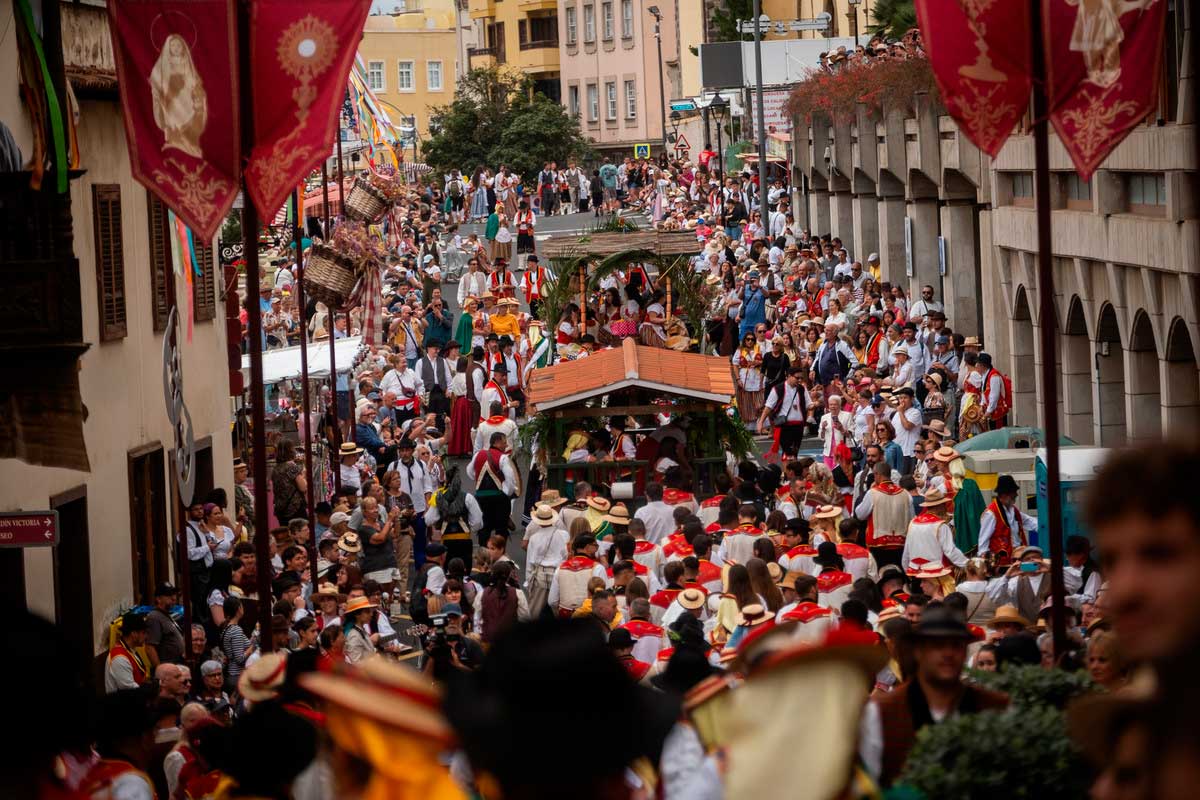

La Orotava gathered hundreds of people dressed in traditional costumes to celebrate its iconic popular festival. The day featured the participation of 77 floats and numerous folk groups that paraded through the main streets of the northern municipality. This event marks the conclusion of the patron saint festivities of the Villa with a massive turnout of locals and visitors.
The traditional Romería de San Isidro in La Orotava celebrated its 89th edition in an atmosphere of fervour and tradition. The event began in the morning with a solemn Eucharist at the Church of the Conception. During the mass, attendees participated in the customary offering of fruits from the fields and renewed the promise made by local farmers.
The Festive Route of the Romería de San Isidro in La Orotava
The festive parade commenced from the San Francisco temple after the morning religious ceremonies. The procession moved slowly through the historic centre, concluding at the well-known Plaza de la Paz. Musical bands enlivened the route along with bonfires, shared meals, and livestock.
A total of 30 musical groups from the islands actively participated in this grand celebration of traditions. The musical ensembles enhanced the passage of the floats adorned with farming tools and fresh produce. Crowds filled the pavements of the Villa to enjoy one of the most significant celebrations in the Canary Islands.
The Historical Origin of the Festivals of La Orotava
The origin of this popular event dates back to 1846 in northern Tenerife. The mayor at the time, Bernardo de Ascanio y Molina, introduced the first formal pilgrimage after a trip to Madrid. The Canarian leader funded the event himself after observing the celebrations in the Spanish capital.
The modern and popular structure of the festival was solidified in 1936 in the municipality. The Liceo de Taoro took over the direct management of the parade and introduced the traditional elements that remain today. The institution definitively incorporated livestock, organised folk groups, and decorative floats.
The current format of the Festivals of La Orotava has been sustained every June without interruption. The celebration has only experienced two recent cancellations in its history during 2020 and 2021. The health crisis caused by the covid-19 pandemic temporarily led to the event’s cancellation.