



– GOVERNMENT OF THE CANARY ISLANDS
SANTA CRUZ DE TENERIFE 16 Jun. (EUROPA PRESS) –
The Ministry of Social Welfare, Equality, Youth, Childhood, and Families of the Government of the Canary Islands has launched the ‘Alisio’ app, a comprehensive support service for non-professional caregivers based on the use of new technologies.
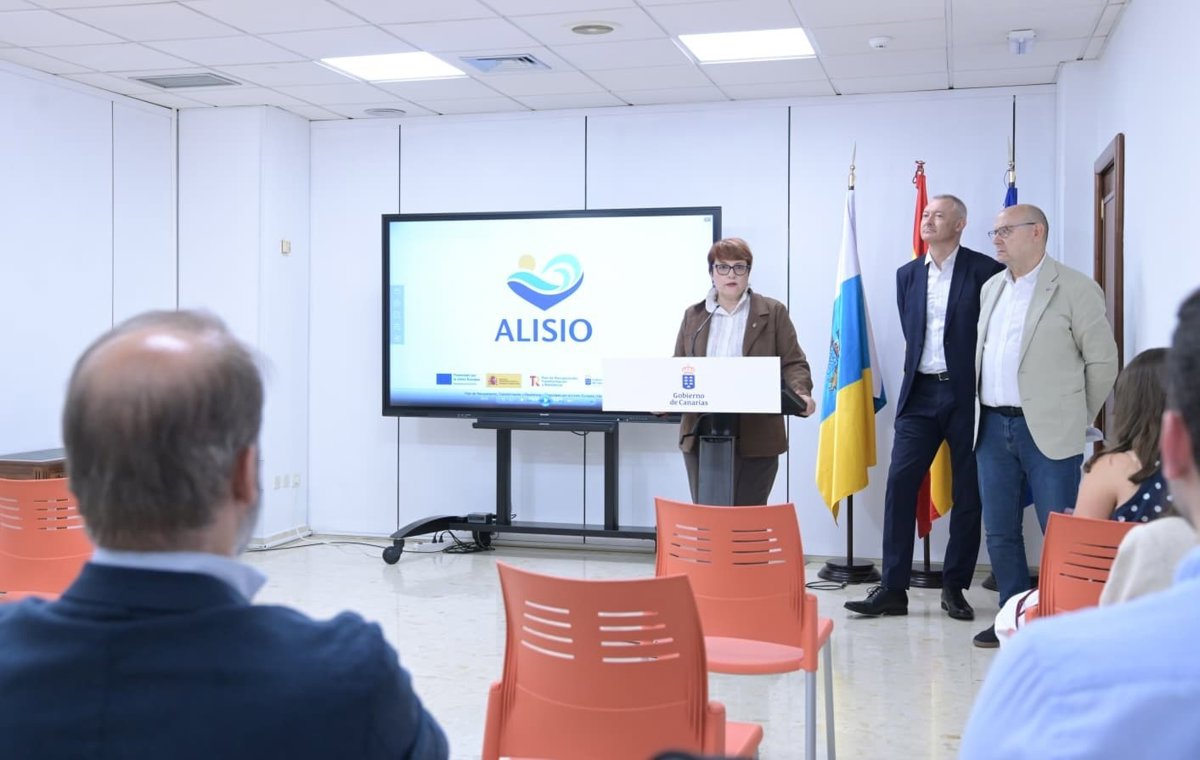
The Minister for Social Welfare, Candelaria Delgado; the Deputy Minister for Equality, Juan Martínez Doreste, and the CEO of Okencasa, Iñigo Kortabitarte, presented this new tool on Tuesday, which aims to reach 20,000 caregivers by 2028.
Delgado stated that the objectives of ‘Alisio’ are “to support caregivers in improving their quality of life, enhance their caring capacity, and contribute to ensuring that older individuals can remain in their usual environment for longer with greater well-being and dignity.”
In the Canary Islands, she noted, “as in the rest of the country, most care for dependent elderly people falls within the family context, predominantly with female caregivers. These individuals provide care with dedication, responsibility, and commitment, yet often do so in solitude, without sufficient support and at the cost of their own physical, emotional, and social well-being.”
In her opinion, “this leads to deterioration and ultimately has a negative impact on both caregivers and those receiving care, as well as on the public system itself.”
The minister also emphasized that with the launch of ‘Alisio’, “the aim is to respond not when problems become severe, but to anticipate them, prevent them, and provide support from a modern and responsible perspective on public care policies.”
Juan Martínez Doreste assured that “Alisio is a pioneering and innovative psychoeducational support service for family caregivers, positioning the Canary Islands at the forefront of care for this group, indicating a paradigm shift.”
For the first time, he pointed out, “the Government of the Canary Islands is promoting a public service that uses technology not as an end in itself, but as a tool for well-being, capable of reaching caregivers wherever they are, adapting to their needs, rhythms, and circumstances.”
According to the Deputy Minister for Equality, the Canary Islands government has launched a pilot programme of the service in La Palma and Lanzarote, “through which 150 families are currently receiving assistance.”
The CEO of Okencasa, Iñigo Kortabitarte, stated that “this initiative rolls out an accessible and secure application offering professional support, personalised training, tools for better organising care, peer support spaces, and follow-up mechanisms that allow for the early detection of risk situations before they become chronic.”
He also noted that the new service “not only promotes cohesion and shared responsibility but also facilitates the deinstitutionalisation of care.”
The goal of the Ministry of Social Welfare, Equality, Youth, Childhood, and Families is to roll out the service over the coming years, ensuring that by 2028 it is fully integrated among dependent individuals receiving Financial Benefits for Family Care (PECEF).
The expectation is to reach 10,000 users of the service by 2027 and 20,000 by 2028.
“With this service, the Government of the Canary Islands reaffirms its commitment to a caring society that acknowledges the value of the invisible work of caregivers and moves towards a fairer, more responsible, and solidarity-based model. Alisio is not just a tool; it is a declaration of principles: in the Canary Islands, no one who cares should feel alone,” concluded the Minister for Social Welfare.
AN INTEGRATED SERVICE FOR NON-PROFESSIONAL CAREGIVERS
The ‘Alisio’ programme constitutes an integrated service supported by multiple areas of action.
On one hand, there is a care team, represented through an app designed to bring together family members involved in the care process. It also includes a biopsychosocial assessment at the beginning of the process to establish the care context and personalise the support plan for each caregiver.
The programme also establishes an individualised training pathway comprising 15 modules in video format about care and self-care, as well as a personalised plan of 3 to 5 training sessions aimed at developing skills for everyday caregiving.
Additionally, the initiative includes two sessions of psychosocial support, each lasting 45 minutes, conducted via videoconference with a specialist in family care, as well as unlimited access for caregivers to an online community of mutual support and practical resources that are updated daily from the start to the end of the intervention.
In this way, the ‘Alisio’ programme contributes to the sustainability of the care system by reducing urgent situations, delaying unwanted institutionalisation, and optimising the use of public resources.