

Extreme UV Radiation Risk in Canary Islands
The Canary Islands’ Health Department, via the General Directorate of Public Health, is steering a preventive plan addressing the risks of ultraviolet (UV) radiation exposure. This plan offers recommendations to mitigate health effects associated with varying UV levels.
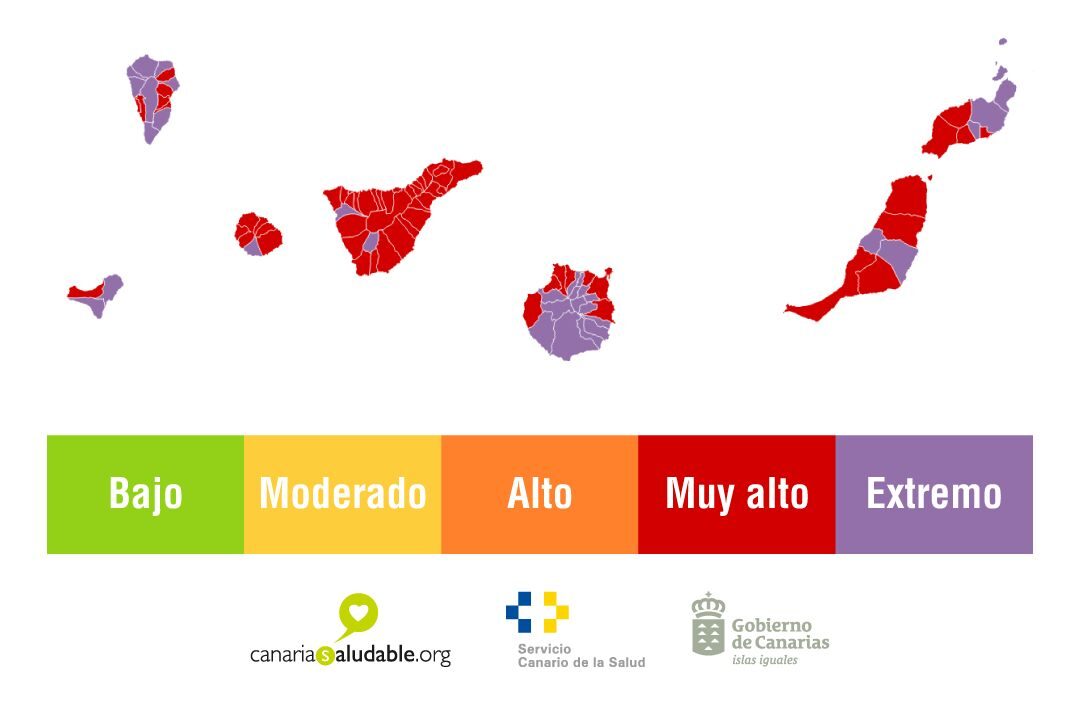
Recent data from the State Meteorological Agency (AEMET) indicate extreme UV radiation risk until 6 July in the following areas:
- La Palma: Barlovento, Garafía, Puntagorda, Puntallana, Tijarafe, El Paso, Villa de Mazo, Fuencaliente.
- El Hierro: Valverde, El Pinar.
- La Gomera: Alajeró.
- Tenerife: Santiago del Teide, Vilaflor de Chasna.
- Gran Canaria: Artenara, Tejeda, Moya, Teror, Santa Brígida, Valleseco, Vega de San Mateo, Valsequillo, Ingenio, Agüimes, Santa Lucía de Tirajana, San Bartolomé de Tirajana, Mogán.
- Fuerteventura: Antigua, Betancuria.
- Lanzarote: Teguise, Haría.
- La Graciosa.
At this extreme level, the public is advised to entirely avoid sun exposure at all times. Other municipalities in the Canary Islands are classified as having a “very high” UV radiation risk.
Recommendations
The Health Department highlights that the Canary Islands have the highest UV radiation levels in Spain year-round. Sun safety is essential not just in summer but throughout the year—even on cloudy days, as UV rays can penetrate clouds.
When UV risk is very high, health experts recommend using a daily sunscreen (minimum SPF 50), seeking shade during peak hours, wearing wide-brimmed hats and protective clothing, and using suitable sunglasses. Special attention should also be given to protecting vulnerable groups like children and the elderly, as well as those working outdoors.
The long-term effects of sun exposure can lead to serious conditions, including skin cancers, with risks increasing from childhood sunburns. Notably, UV rays can still affect individuals on overcast days or in breezy conditions.
Risk Levels
The preventive plan categorises UV risk into five levels: low, moderate, high, very high, and extreme, each with tailored protective advice. Weekly risk maps are published by the General Directorate of Public Health in conjunction with AEMET data.
Health Risks of UV Radiation
Acute UV exposure can cause DNA damage, sunburns, phototoxic reactions, and potentially immunosuppression, increasing skin cancer risks. Those most at risk include individuals frequently exposed to the sun, such as outdoor workers and those with lighter skin or a history of skin cancer in the family.
Protecting Against Extreme UV Radiation
To effectively manage the current extreme UV risk in the Canary Islands, the fundamental recommendation remains the complete avoidance of sun exposure.
For further information on UV radiation in Spain, consult: AEMET UV Radiation.